

From spiral dough mixers in bakeries to planetary mixers in restaurants, these machines power the food industry, ensuring that businesses can keep up with customer demand while maintaining quality.
Why Commercial Mixers Are Indispensable
Every bakery, restaurant, or catering business that works with doughs, batters, or creams relies heavily on a commercial mixer. Its main benefits include:
-
High Capacity – Handle large batches of ingredients efficiently.
-
Consistency – Achieve uniform textures and reliable results every time.
-
Time Savings – Reduce manual labor and speed up production.
-
Versatility – Attachments allow mixing, whipping, and kneading with one machine.
-
Durability – Built to withstand heavy-duty, continuous use.
For businesses, this means faster service, less waste, and higher-quality products.
Types of Commercial Mixers
Different foodservice operations require different types of commercial mixers. The three most common categories include:
1. Planetary Mixer
The most versatile option, planetary mixers feature a stationary bowl while the mixing attachment rotates around it. They are ideal for mixing cake batters, creams, and even light dough. Commonly found in restaurants, pastry shops, and small bakeries.
2. Spiral Mixer
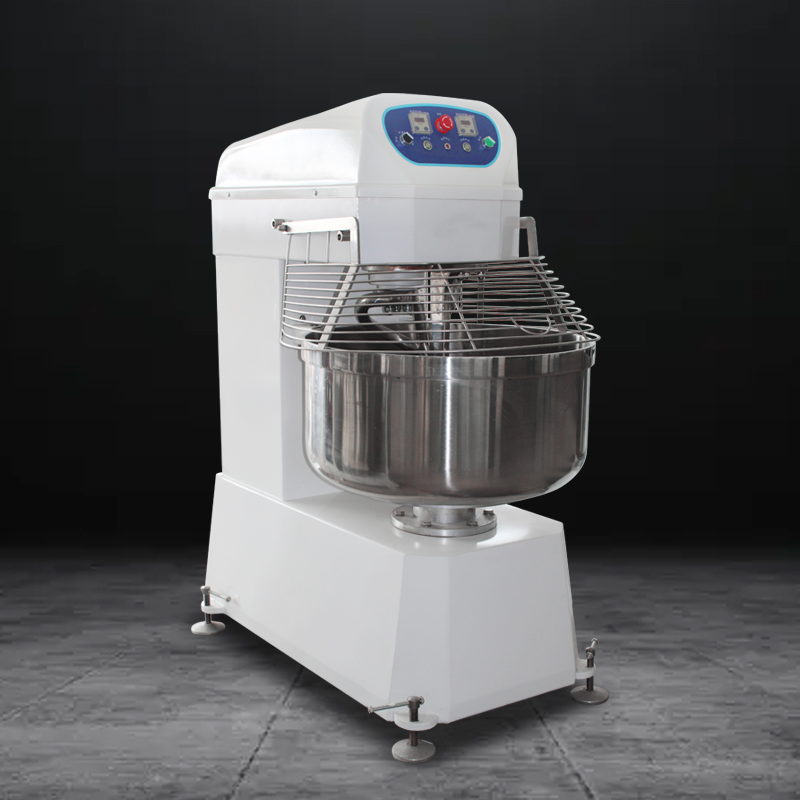
Perfect for bread-making, spiral mixers rotate both the bowl and the dough hook, allowing for gentle, thorough kneading. This design prevents overheating of the dough, maintaining perfect gluten structure for artisan breads and pizzas.
3. Dough Mixer / Industrial Mixer
Designed for large-scale food production, industrial mixers handle massive batches of dough, batter, or filling. Common in large bakeries, factories, and foodservice distribution centers.
Key Features of a Commercial Mixer
When selecting a commercial kitchen mixer, businesses should consider:
-
Capacity – From 5-quart planetary mixers for small shops to 200-quart spiral mixers for industrial use.
-
Power and Speed Control – Multiple speed settings and powerful motors to handle different recipes.
-
Attachments and Accessories – Dough hooks, whisks, flat beaters, and optional attachments for pasta or meat processing.
-
Material and Build – Stainless steel bowls and heavy-duty frames for longevity.
-
Safety Features – Bowl guards, emergency stop buttons, and overload protection.
Applications of Commercial Mixers
The versatility of a commercial mixer makes it essential across the food industry:
-
Bakeries – For bread dough, cake batters, cookies, croissants, and pastries.
-
Pizzerias – Dough mixing for consistent pizza crusts.
-
Restaurants – Sauces, whipped creams, mashed potatoes, and specialty desserts.
-
Hotels and Catering – High-volume food preparation for events and buffets.
-
Food Processing Plants – Large-batch mixing for packaged foods.
The Impact of Commercial Mixers on Productivity
A commercial mixer directly improves workflow. Instead of spending hours kneading dough by hand, bakeries can prepare hundreds of loaves in a fraction of the time. Restaurants save time whipping creams or mixing sauces, allowing chefs to focus on creativity instead of repetitive labor.
This efficiency translates to:
-
Lower labor costs.
-
Higher output capacity.
-
Improved product quality and consistency.
-
Faster service during peak business hours.
Maintenance and Cleaning of Commercial Mixers
To ensure long-term performance, regular care is crucial:
-
Daily Cleaning – Wipe down surfaces, clean attachments, and remove food residue.
-
Lubrication – Keep gears and moving parts well-oiled.
-
Inspection – Regularly check motors, belts, and safety switches.
-
Professional Servicing – Annual maintenance helps extend lifespan.
With proper care, a commercial mixer can operate reliably for many years.
Trends in Commercial Mixer Technology
Like many areas of commercial kitchen equipment, mixers are evolving with new technologies:
-
Digital Controls – Precise mixing times and speeds.
-
Programmable Recipes – Store customized mixing programs.
-
Energy-Efficient Motors – Reduce electricity consumption.
-
Compact Designs – Space-saving models for small kitchens.
-
Heavy-Duty Industrial Mixers – Meeting the demand for mass food production.
These innovations make mixers smarter, more reliable, and more cost-efficient.
Choosing the Right Commercial Mixer
When selecting a restaurant or bakery mixer, businesses should consider:
-
Volume of Production – Small cafés may need a 10-quart planetary mixer, while bakeries may require a 60-quart spiral mixer.
-
Menu Needs – Bakeries focusing on bread should invest in spiral mixers, while restaurants benefit from versatile planetary mixers.
-
Budget and ROI – A durable, energy-efficient model may cost more initially but saves money in the long run.
-
Brand and Warranty – Reliable manufacturers offer better support and long-term value.
The commercial mixer is one of the most important tools in the foodservice industry. From bakeries to restaurants, hotels to catering services, mixers provide the consistency, efficiency, and versatility required to meet customer demands.
By choosing the right planetary mixer, spiral mixer, or industrial dough mixer, businesses can streamline operations, reduce costs, and deliver top-quality products. As technology continues to advance, commercial mixers will only become more efficient and essential in shaping the future of modern kitchens.