In recent years, a quiet revolution has taken place in kitchens and open-air markets across Southeast Asia—driven not by new recipes or exotic ingredients, but by a technological shift in how food is grilled. Gas grill radiators, also known as radiant grills, are emerging as the preferred cooking solution for street vendors, restaurants, and home cooks alike, offering a blend of speed, efficiency, and sustainability that traditional charcoal or open-flame grills struggle to match.
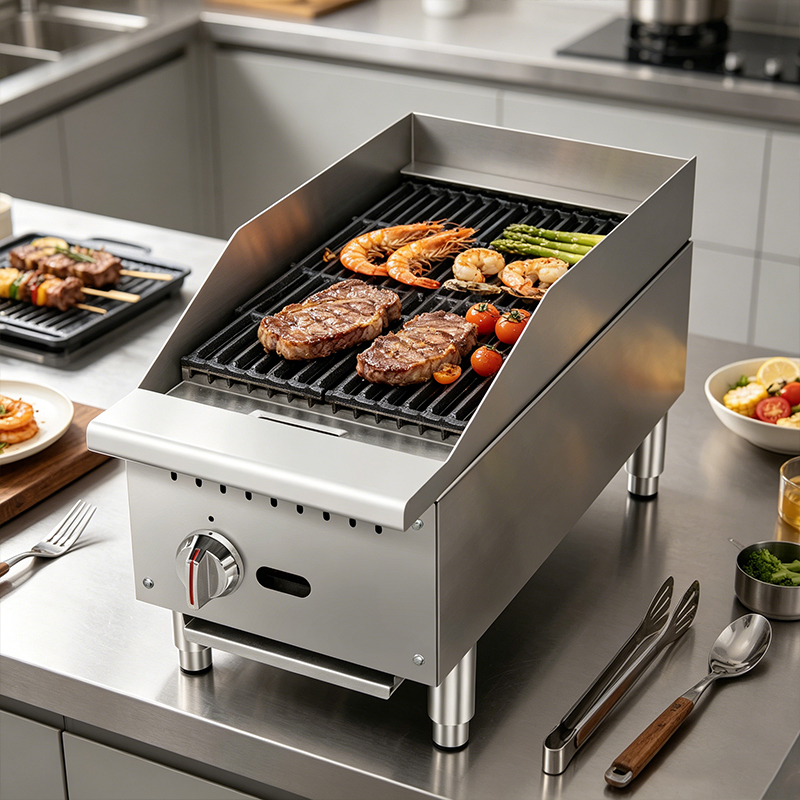
Unlike conventional grills that rely on direct flame contact, gas radiant grills use infrared radiation to transfer heat directly to food. This method ensures even cooking, reduces flare-ups, and significantly lowers fuel consumption. In countries like Thailand, Vietnam, Indonesia, and the Philippines—where street food culture thrives—this innovation is proving particularly transformative.
“Before, we used charcoal grills that produced heavy smoke and required constant monitoring,” said Nila Sari, a street vendor in Jakarta who now operates a gas-powered radiant grill. “Now, I can cook 20 skewers in 10 minutes with minimal effort, and my customers love the consistent flavor and cleaner environment.”
The advantages of these grills extend beyond convenience. With rising concerns over air pollution and public health, city governments across Southeast Asia are pushing for cleaner cooking alternatives. In cities like Bangkok and Manila, municipal authorities have begun incentivizing small-scale food vendors to switch from charcoal to gas-based systems, citing reductions in particulate matter and carbon emissions.
According to a 2023 study by the ASEAN Centre for Sustainable Energy, gas radiant grills emit up to 60% less CO₂ than traditional charcoal grills and produce nearly zero soot. Additionally, they operate at higher thermal efficiency—around 85%, compared to just 30–40% for open-flame methods—meaning less gas is wasted during cooking.
Manufacturers in China and South Korea have responded to this growing demand by exporting affordable, modular radiant grill units tailored for Southeast Asian markets. Many models feature adjustable heat zones, built-in temperature gauges, and compact designs suitable for narrow alleyways or rooftop kitchens. Some even integrate smart sensors that alert users when the grill reaches optimal temperature—ideal for busy food stalls operating under time pressure.
Beyond commercial applications, residential adoption is also on the rise. In Singapore and Malaysia, homeowners are increasingly investing in gas radiant grills for backyard barbecues, drawn by their ease of use and reduced cleanup. Unlike charcoal pits, which leave behind ash and residue, radiant grills leave minimal mess and are easier to maintain.
Another key factor driving adoption is safety. Open flames pose significant fire risks, especially in densely populated urban areas. Radiant grills eliminate exposed flames entirely, reducing the chance of accidental fires—a major concern in regions prone to monsoon rains and high humidity.
However, challenges remain. The initial cost of a gas radiant grill—ranging from $150 to $500—can be prohibitive for low-income vendors. To address this, several NGOs and government programs have launched subsidy schemes. In Vietnam, for example, the Ministry of Health partnered with private companies to distribute subsidized grills to 10,000 street food vendors in 2023.
Moreover, infrastructure limitations in rural areas still hinder widespread adoption. Reliable access to liquefied petroleum gas (LPG) cylinders remains inconsistent in remote provinces. Yet, mobile LPG delivery services and community refill stations are slowly improving availability.
Looking ahead, industry experts predict continued growth. “We’re seeing a clear trend: consumers want faster, cleaner, smarter cooking solutions,” said Dr. Linh Tran, an energy policy analyst at the University of Hanoi. “Radiant grills aren’t just a passing fad—they represent the future of sustainable grilling in Southeast Asia.”
With governments, businesses, and communities embracing this technology, gas grill radiators are no longer just kitchen gadgets—they’re catalysts for healthier, more efficient, and environmentally responsible food culture across the region.
As the scent of perfectly seared satay and grilled seafood wafts through city streets, one thing is clear: the era of the humble charcoal pit may be fading—and the radiant grill is stepping into the spotlight.
————————————
We are a professional manufacturer of Commercial Refrigerator and have extensive experience in the manufacturing of Bakery Equipment ,We also produce Western Kitchen Equipment.
Our wide range of products includes commercial refrigerators with excellent refrigeration and Steamed Rice Cabinet for different scenarios.
In addition, we also provide High Temperature Intelligent Disinfection Cabinet with intelligent control of high temperature and launch restaurant Warmer Dining Cart with excellent thermal insulation performance.
In the bakery and cooking industry, our equipment is trusted by customers, such as high capacity Commercial Gas Convection Oven.We also provide stable Gas Charbroiler,Gas Griddle,Gas Ranges and Gas deep fryer to meet the stringent requirements of different customers for the baking process.