

In recent years, Southeast Asia has witnessed a significant shift in the commercial food service sector, driven by rising urbanization, increasing disposable incomes, and evolving consumer preferences toward healthier, safer, and more consistent meals. At the heart of this transformation lies a quiet but powerful innovation—commercial steam rice cookers. From bustling street food hubs in Bangkok to high-end hotel kitchens in Jakarta and upscale dining establishments in Ho Chi Minh City, these modern appliances are redefining how rice is cooked at scale.
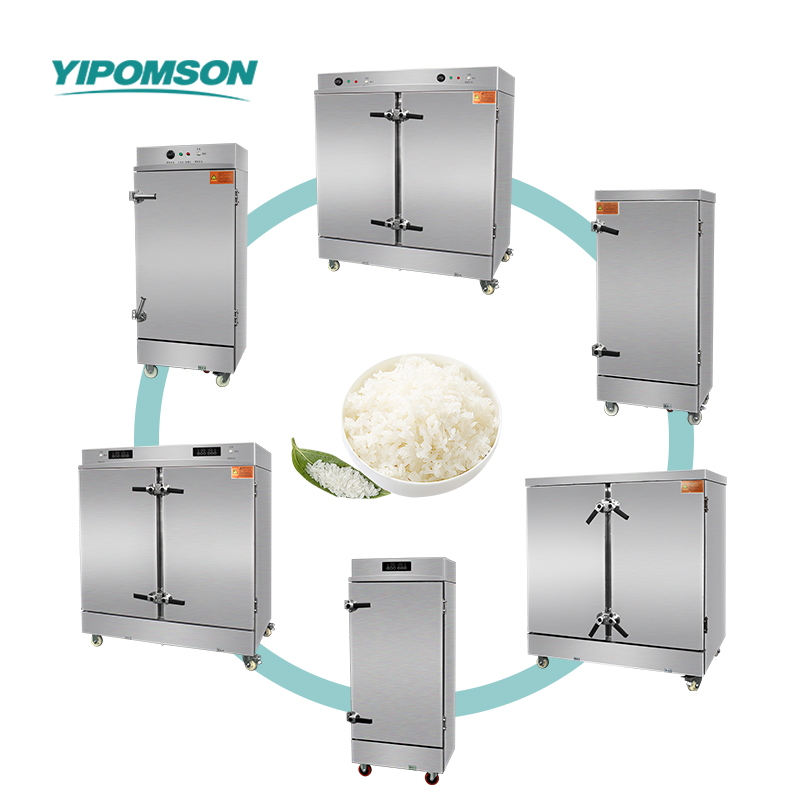
Unlike traditional stovetop methods that rely on direct heat and manual monitoring, commercial steam rice cookers utilize controlled steam circulation to cook rice evenly and efficiently. This technology not only preserves the natural texture and flavor of grains but also ensures batch-to-batch consistency—a crucial factor for large-scale operations like cafeteria chains, school meal providers, and hotel banquet services.
One of the primary reasons behind the rapid adoption of steam rice cookers across the region is their superior hygiene standards. In Southeast Asia’s humid tropical climate, where bacterial growth and contamination risks are higher, the sealed, steam-based cooking process minimizes exposure to airborne particles and cross-contamination. Unlike open pots or woks, steam cookers operate in enclosed environments, reducing the risk of pests and ensuring compliance with strict food safety regulations—especially important for international brands and certified food outlets.
Energy efficiency is another major selling point. Traditional rice cooking methods often require prolonged boiling and constant attention, leading to high energy consumption. In contrast, modern commercial steam rice cookers use up to 40% less energy than conventional stovetop units. Many models now come equipped with smart controls, programmable timers, and automatic shut-off features, further reducing operational costs and labor requirements. For restaurant owners facing rising electricity bills and tightening profit margins, such savings are highly valuable.
Manufacturers across China, South Korea, and Japan have responded to the growing demand by introducing affordable, durable, and user-friendly models tailored for Southeast Asian kitchens. These units are designed to handle various rice types—jasmine, glutinous, basmati, and brown rice—with customizable settings for water ratio, cooking time, and temperature. Some advanced models even integrate IoT capabilities, allowing remote monitoring via smartphone apps, real-time maintenance alerts, and usage analytics—features increasingly sought after by tech-savvy operators.
The impact is particularly visible in countries like Vietnam and Thailand, where street food culture thrives. Small vendors and mobile food carts are now adopting compact, countertop steam rice cookers to maintain quality while scaling operations. In Thailand, popular chain restaurants like S&P and Sapporo have implemented steam rice systems in all their outlets to standardize preparation and reduce waste. Similarly, in Indonesia, major fast-casual chains like KFC and Pizza Hut have integrated steam cookers into their kitchen workflows to improve food consistency and support sustainability goals.
Beyond restaurants, institutions such as schools, hospitals, and corporate cafeterias are also embracing this technology. In Malaysia, several government-backed school meal programs have adopted steam rice cookers to ensure safe, nutritious, and uniform meal delivery to thousands of students daily. The ability to cook large volumes without compromising quality makes these units ideal for mass feeding scenarios.
Environmental concerns are also fueling adoption. As Southeast Asian nations push toward greener economies and carbon reduction targets, businesses are seeking eco-friendly alternatives. Steam rice cookers produce fewer emissions compared to gas-powered stoves and can be paired with renewable energy sources. Their reduced water and energy consumption aligns with global sustainability trends and helps companies meet ESG (Environmental, Social, and Governance) benchmarks.
Looking ahead, industry experts predict continued growth in the commercial steam rice cooker market across Southeast Asia. According to a 2023 report by Grand View Research, the regional market for commercial kitchen equipment is expected to grow at a CAGR of 8.7% through 2030, with steam cooking appliances accounting for a significant share. Innovations such as solar-powered models, AI-driven recipe optimization, and modular designs for flexible kitchen layouts are expected to further accelerate adoption.
“Steam cooking isn’t just about convenience—it’s about building smarter, safer, and more sustainable kitchens,” said Dr. Lina Tan, a food technology specialist based in Singapore. “In a region where food is central to culture and identity, getting rice right matters. These cookers help preserve tradition while meeting modern demands.”
For restaurateurs, caterers, and food service managers across the ASEAN region, investing in commercial steam rice cookers is no longer a luxury—it’s a strategic necessity. As competition intensifies and customer expectations rise, the ability to deliver consistently delicious, hygienic, and efficient meals will define the next generation of successful food businesses in Southeast Asia.
With innovation, affordability, and sustainability converging, the humble rice cooker is proving to be one of the most transformative tools in the modern kitchen—bringing the future of food service into focus, one perfectly steamed grain at a time.
————————————
We are a professional manufacturer of Commercial Refrigerator and have extensive experience in the manufacturing of Bakery Equipment ,We also produce Western Kitchen Equipment.
Our wide range of products includes commercial refrigerators with excellent refrigeration and Steamed Rice Cabinet for different scenarios.
In addition, we also provide High Temperature Intelligent Disinfection Cabinet with intelligent control of high temperature and launch restaurant Warmer Dining Cart with excellent thermal insulation performance.
In the bakery industry, our equipment is trusted by customers, such as high capacity Commercial Oven For Bakery, and advanced Spiral Dough Mixer .We also provide stable Electric Dough Fermenting Proofer to meet the stringent requirements of different customers for the baking process.
