

The commercial gas deep fryer market in Southeast Asia is experiencing rapid growth, driven by expanding restaurant chains, booming street food culture, and increasing investments in efficient kitchen infrastructure. According to recent industry reports from Frost & Sullivan and Statista, the region’s commercial kitchen equipment market is projected to grow at a compound annual growth rate (CAGR) of 8.7% through 2028, with gas deep fryers leading the charge in high-volume food preparation sectors.
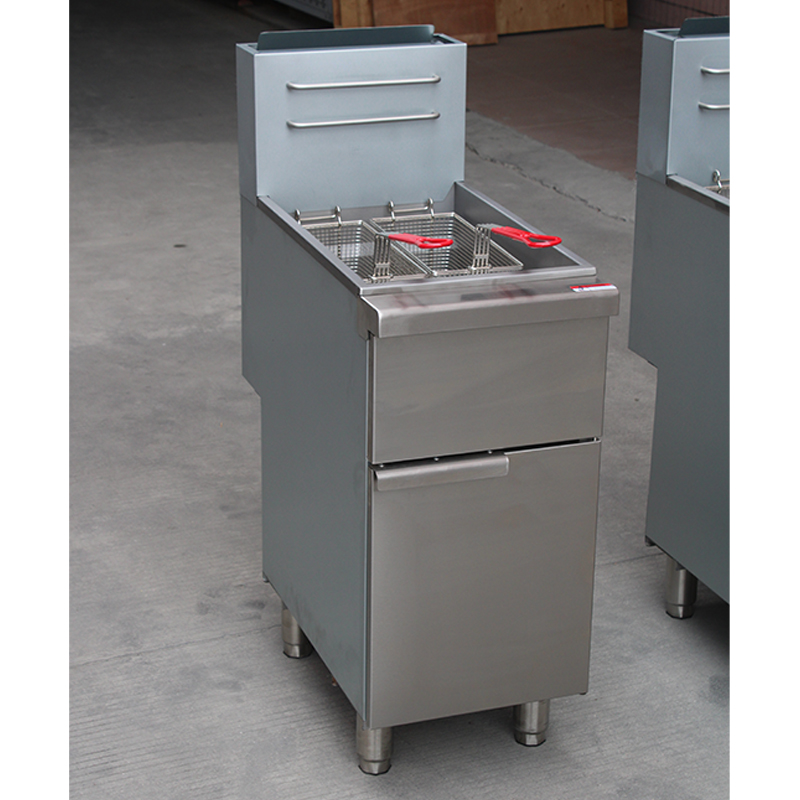
One of the primary reasons behind this surge is the region’s unique culinary landscape—deep-fried snacks like *siomai*, *tahu gejrot*, *pisang goreng*, and *crispy chicken* are staples in both home kitchens and commercial eateries. The demand for consistent, high-quality frying results has pushed operators toward reliable, gas-powered equipment that delivers faster heating, precise temperature control, and lower operating costs compared to electric alternatives.
Unlike electric fryers, which often require significant electrical infrastructure and face power instability issues in some rural or semi-urban areas, gas deep fryers offer uninterrupted performance. In countries like Indonesia and the Philippines, where electricity supply can be inconsistent, gas remains a stable and dependable fuel source. Additionally, natural gas and liquefied petroleum gas (LPG) are widely available and cost-effective, making gas fryers an economically viable choice for small to medium-sized food businesses.
Manufacturers such as Hoshizaki, Sodexo, and local brands like PT Kita Jaya (Indonesia) and V-Tech (Thailand) have responded by introducing compact, modular, and energy-efficient gas deep fryers tailored for Southeast Asian markets. These models feature advanced safety mechanisms—such as automatic shut-off sensors, flame failure protection, and non-slip bases—to comply with regional safety standards while enhancing operational efficiency.
A key innovation gaining traction is the integration of digital temperature controls and smart monitoring systems. For instance, newer models now come equipped with Bluetooth-enabled thermostats that allow chefs to monitor oil temperature remotely via smartphone apps. This not only improves consistency but also reduces human error and oil waste—critical factors for franchise chains aiming to standardize food quality across multiple outlets.
In Vietnam, where the fast-food sector has expanded rapidly over the past five years, many new burger joints and fried snack shops are opting for commercial gas fryers to handle peak-hour demand. “We used to rely on electric fryers, but they would overheat during lunch rushes,” said Nguyen Thi Lan, owner of a popular street food stall in Ho Chi Minh City. “Switching to a gas model cut our prep time by nearly 30% and reduced our energy bills significantly.”
Similarly, in Bangkok, Thailand, food courts and convenience stores are investing heavily in gas-fueled fryers to support high-volume operations. A major retail chain recently deployed 150 units of a newly launched 4-basket gas deep fryer across its network, citing improved throughput and reduced maintenance needs as key benefits.
Sustainability is another driving factor. Many manufacturers are now promoting low-emission burners and recyclable materials in their fryer designs. Some models even include built-in oil filtration systems that extend oil life by up to 50%, reducing waste and lowering long-term operational costs—an appealing feature for environmentally conscious operators.
Government initiatives in several Southeast Asian nations are also encouraging the adoption of cleaner cooking technologies. In Malaysia and Singapore, incentives for businesses upgrading to energy-efficient kitchen appliances are helping accelerate the shift away from outdated, inefficient equipment. Meanwhile, Indonesia’s Ministry of Industry has launched pilot programs to promote gas-based commercial cooking in food hubs, recognizing its role in boosting productivity and reducing carbon emissions.
Looking ahead, experts predict that the integration of AI-driven predictive maintenance and IoT connectivity will further revolutionize the commercial gas deep fryer market. Future models may automatically detect oil degradation, suggest optimal frying cycles, and even place orders for replacement parts—transforming the fryer from a simple appliance into a smart kitchen hub.
“The future of food service in Southeast Asia isn’t just about speed—it’s about intelligence, sustainability, and scalability,” said Dr. Arif Rahman, a food technology analyst at ASEAN Innovation Institute. “Gas deep fryers are no longer just tools; they’re becoming essential components of a modern, agile food ecosystem.”
As urban centers continue to expand and consumer appetite for convenient, delicious, and consistently prepared meals grows, the commercial gas deep fryer stands out as a critical enabler of success in Southeast Asia’s dynamic foodservice landscape. With technological advancements, affordability, and alignment with regional energy realities, gas fryers are not just a trend—they’re a transformation in the making.
————————————
We are a professional manufacturer of Commercial Refrigerator and have extensive experience in the manufacturing of Bakery Equipment ,We also produce Western Kitchen Equipment.
Our wide range of products includes commercial refrigerators with excellent refrigeration and Steamed Rice Cabinet for different scenarios.
In addition, we also provide High Temperature Intelligent Disinfection Cabinet with intelligent control of high temperature and launch restaurant Warmer Dining Cart with excellent thermal insulation performance.
In the bakery industry, our equipment is trusted by customers, such as high capacity Commercial Oven For Bakery, and advanced Spiral Dough Mixer .We also provide stable Electric Dough Fermenting Proofer to meet the stringent requirements of different customers for the baking process.
