

The Middle East’s commercial kitchen landscape is undergoing a significant transformation, driven by urbanization, rising consumer expectations, and stricter food safety regulations. In this evolving environment, commercial under-counter refrigerators have emerged as a game-changing solution—offering efficient cooling in minimal footprint spaces. From bustling Dubai cafés to high-end Riyadh hotel kitchens, these sleek, built-in refrigeration units are now standard fixtures in modern foodservice operations.
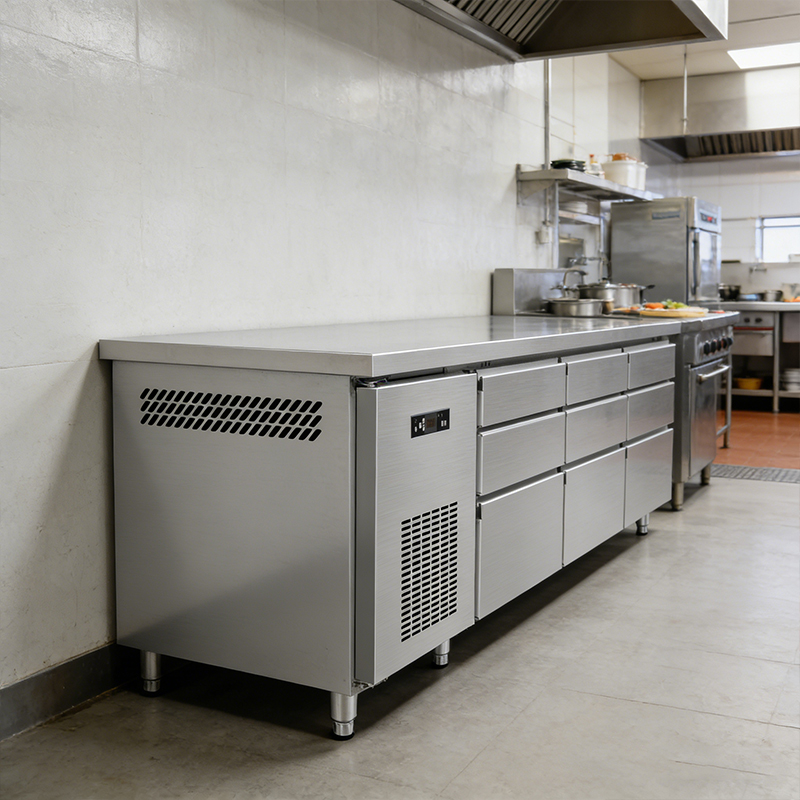
According to recent market research by Frost & Sullivan, the demand for commercial under-counter refrigerators in the GCC region has grown by over 24% year-on-year since 2021. This surge is fueled by several key factors: the proliferation of small-format eateries, the rise of quick-service restaurants (QSRs), and the need for compliant, hygienic storage in tight kitchen layouts.
One of the primary advantages of under-counter refrigerators is their space-saving design. Unlike traditional floor-standing units, these refrigerators are installed beneath countertops, freeing up valuable floor space in kitchens where every square meter counts. This is particularly critical in densely populated urban centers like Doha, Abu Dhabi, and Jeddah, where real estate costs are soaring and kitchen footprints are shrinking.
Beyond spatial efficiency, energy efficiency has become a decisive factor in procurement decisions. Modern under-counter models from leading brands such as Haier, Midea, and Samsung now feature advanced thermoelectric cooling systems, LED lighting, and intelligent temperature control that reduce power consumption by up to 35% compared to older models. These innovations align with regional sustainability goals—such as Saudi Arabia’s Vision 2030 and UAE’s Net Zero 2050 initiative—making energy-efficient refrigeration not just practical, but strategic.
Food safety compliance is another major driver. The Gulf Standardization Organization (GSO) and national health authorities across the region have tightened regulations on temperature monitoring and hygiene in food storage. Many new under-counter refrigerators now come equipped with digital temperature logs, remote monitoring via mobile apps, and alarms for temperature deviations—ensuring adherence to strict health codes without manual oversight.
“With our clients operating in high-traffic areas like Dubai Mall or Riyadh’s King Fahd Road, we can’t afford inefficiency,” says Ahmed Al-Mansoori, head of kitchen operations at a mid-sized chain of Middle Eastern fast-casual restaurants. “We’ve switched entirely to under-counter refrigerators because they keep our ingredients safe, save us space, and integrate seamlessly with our digital kitchen management system.”
Moreover, the aesthetic appeal of these units cannot be overlooked. Designed with minimalist finishes in stainless steel, matte black, or white, they blend effortlessly into contemporary kitchen designs. This visual harmony enhances brand image and supports the premium experience expected in upscale dining venues.
Technology integration is also advancing rapidly. Some models now feature IoT connectivity, allowing managers to monitor fridge performance in real time, receive maintenance alerts, and even adjust settings remotely. For example, a hotel chain in Bahrain recently implemented a fleet of connected under-counter fridges linked to their central property management system, reducing food spoilage incidents by nearly 40%.
Despite their benefits, challenges remain. Initial installation costs can be higher than traditional units, and proper ventilation is crucial—especially in hot desert climates where ambient temperatures often exceed 45°C. However, manufacturers are responding with improved heat dissipation systems and enhanced insulation materials tailored for extreme conditions.
Looking ahead, experts predict continued growth in the commercial under-counter refrigerator market across the Middle East. As more startups enter the foodservice industry and existing businesses upgrade their facilities, demand for compact, smart, and sustainable cooling solutions will only intensify.
“In the next five years, I expect under-counter refrigerators to dominate commercial kitchens—not just in the GCC, but throughout the broader Middle East and North Africa (MENA) region,” says Dr. Layla Hassan, a food systems analyst at the Kuwait Institute for Scientific Research. “They represent the future of efficient, responsible, and scalable kitchen infrastructure.”
For suppliers and retailers, this shift presents a lucrative opportunity. Companies are investing heavily in localized distribution networks, after-sales support, and training programs for chefs and kitchen staff. Partnerships with major hotel chains, restaurant franchises, and commercial kitchen designers are becoming increasingly common.
In conclusion, the commercial under-counter refrigerator is no longer a niche product—it’s a cornerstone of modern foodservice operations in the Middle East. With its blend of innovation, efficiency, and compliance, it stands at the intersection of culinary excellence and sustainable business practices, shaping the future of commercial kitchens across the region.
————————————
We are a professional manufacturer of Commercial Refrigerator and have extensive experience in the manufacturing of Bakery Equipment ,We also produce Western Kitchen Equipment.
Our wide range of products includes commercial refrigerators with excellent refrigeration and Steamed Rice Cabinet for different scenarios.
In addition, we also provide High Temperature Intelligent Disinfection Cabinet with intelligent control of high temperature and launch restaurant Warmer Dining Cart with excellent thermal insulation performance.
In the bakery industry, our equipment is trusted by customers, such as high capacity Commercial Oven For Bakery, and advanced Spiral Dough Mixer .We also provide stable Electric Dough Fermenting Proofer to meet the stringent requirements of different customers for the baking process.
