

Southeast Asia’s commercial gas stove market is undergoing a transformative phase, with demand soaring across key economies driven by a combination of economic development, urbanization, and environmental consciousness. According to recent data from Grand View Research, the region’s commercial gas appliance market is projected to grow at a compound annual growth rate (CAGR) of over 8% from 2024 to 2030, with gas stoves accounting for the largest segment due to their efficiency, cost-effectiveness, and scalability.
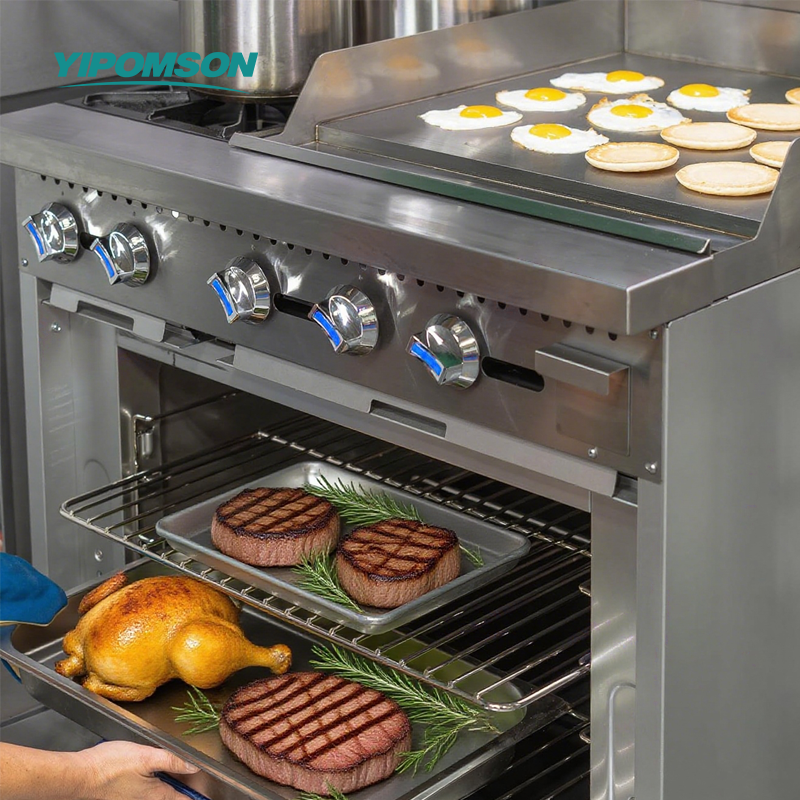
The surge in demand is closely tied to the rapid expansion of the region’s restaurant and hospitality industries. In cities like Jakarta, Bangkok, Ho Chi Minh City, and Manila, the number of new cafes, fast-food chains, and hotel kitchens has increased significantly over the past five years. These establishments prioritize consistent heat control, faster cooking times, and lower long-term operating costs—key advantages offered by modern commercial gas stoves. Unlike electric or biomass-based alternatives, gas stoves deliver instant ignition and precise temperature regulation, making them indispensable in high-volume culinary environments.
Urbanization further amplifies this trend. With more than 50% of Southeast Asia’s population now living in urban centers—projected to rise to 60% by 2030—the need for compact, efficient, and safe kitchen solutions in multi-unit buildings and commercial complexes is intensifying. Gas stoves fit perfectly into this context: they require less space than bulkier electric units, consume less energy per unit of output, and can be easily integrated into modular kitchen designs.
Moreover, governments across the region are actively encouraging the transition from traditional cooking fuels such as wood, coal, and kerosene to cleaner alternatives. Indonesia’s National Energy Policy (KEN), for instance, aims to increase the share of natural gas in the country’s energy mix to 15% by 2030, directly supporting infrastructure upgrades for commercial gas use. Similarly, Thailand’s Ministry of Energy has launched incentive programs for businesses adopting gas-based kitchen systems, including tax breaks and subsidized installation packages.
Environmental concerns are also playing a pivotal role. As ASEAN nations commit to carbon reduction targets under the Paris Agreement, the foodservice sector is under growing pressure to minimize its ecological footprint. Commercial gas stoves produce fewer greenhouse gas emissions compared to diesel or coal-fired cookers, and when powered by biogas or renewable natural gas (RNG), their carbon profile becomes nearly neutral. This aligns with global ESG (Environmental, Social, and Governance) standards increasingly adopted by multinational restaurant chains operating in the region.
Manufacturers are responding swiftly to this demand. International brands such as Midea, Fagor, and Bosch have expanded their regional distribution networks, while local players like PT Arga Pratama (Indonesia) and Hengshun (Vietnam) are developing affordable, locally adapted models tailored to Southeast Asian kitchen layouts and fuel availability. Innovations such as flame failure safety devices, smart temperature sensors, and modular burners are now standard features, enhancing both safety and user experience.
Despite these positive developments, challenges remain. Infrastructure limitations—especially in rural areas—still hinder widespread gas connectivity. Additionally, initial installation costs and safety training requirements pose barriers for small and medium-sized enterprises (SMEs). However, public-private partnerships and microfinancing schemes are emerging to bridge these gaps. For example, the World Bank-backed “Clean Cooking Initiative” in the Philippines provides low-interest loans to small restaurants upgrading to gas stoves.
Looking ahead, the integration of digital technologies will further propel market growth. Smart gas stoves equipped with IoT capabilities allow remote monitoring, predictive maintenance, and energy usage analytics—features highly valued by chain operators aiming to optimize operations and reduce waste.
In conclusion, Southeast Asia’s commercial gas stove market is not just growing—it is evolving into a cornerstone of modern, sustainable foodservice infrastructure. With strong consumer demand, supportive policies, and continuous innovation, the region is poised to become one of the most dynamic markets for commercial gas appliances globally. As chefs, restaurateurs, and policymakers alike recognize the benefits of clean, efficient cooking, the gas stove is no longer just a kitchen tool—it’s a symbol of progress in the region’s culinary and industrial future.
————————————
We are a professional manufacturer of Commercial Refrigerator and have extensive experience in the manufacturing of Bakery Equipment ,We also produce Western Kitchen Equipment.Our wide range of products includes commercial refrigerators with excellent refrigeration and Steamed Rice Cabinet for different scenarios.
In addition, we also provide High Temperature Intelligent Disinfection Cabinet with intelligent control of high temperature and launch restaurant Warmer Dining Cart with excellent thermal insulation performance.
In the bakery industry, our equipment is trusted by customers, such as high capacity Commercial Oven For Bakery, and advanced Spiral Dough Mixer.We also provide stable Electric Dough Fermenting Proofer to meet the stringent requirements of different customers
for the baking process.
